IRISH INDEPENDENT
TRAILBLAZING IRISH DESIGNER LETS THE ‘BANSHEE SCREAM’ BE HEARD IN FAMOUS PUB FOR LONDON FASHION WEEK
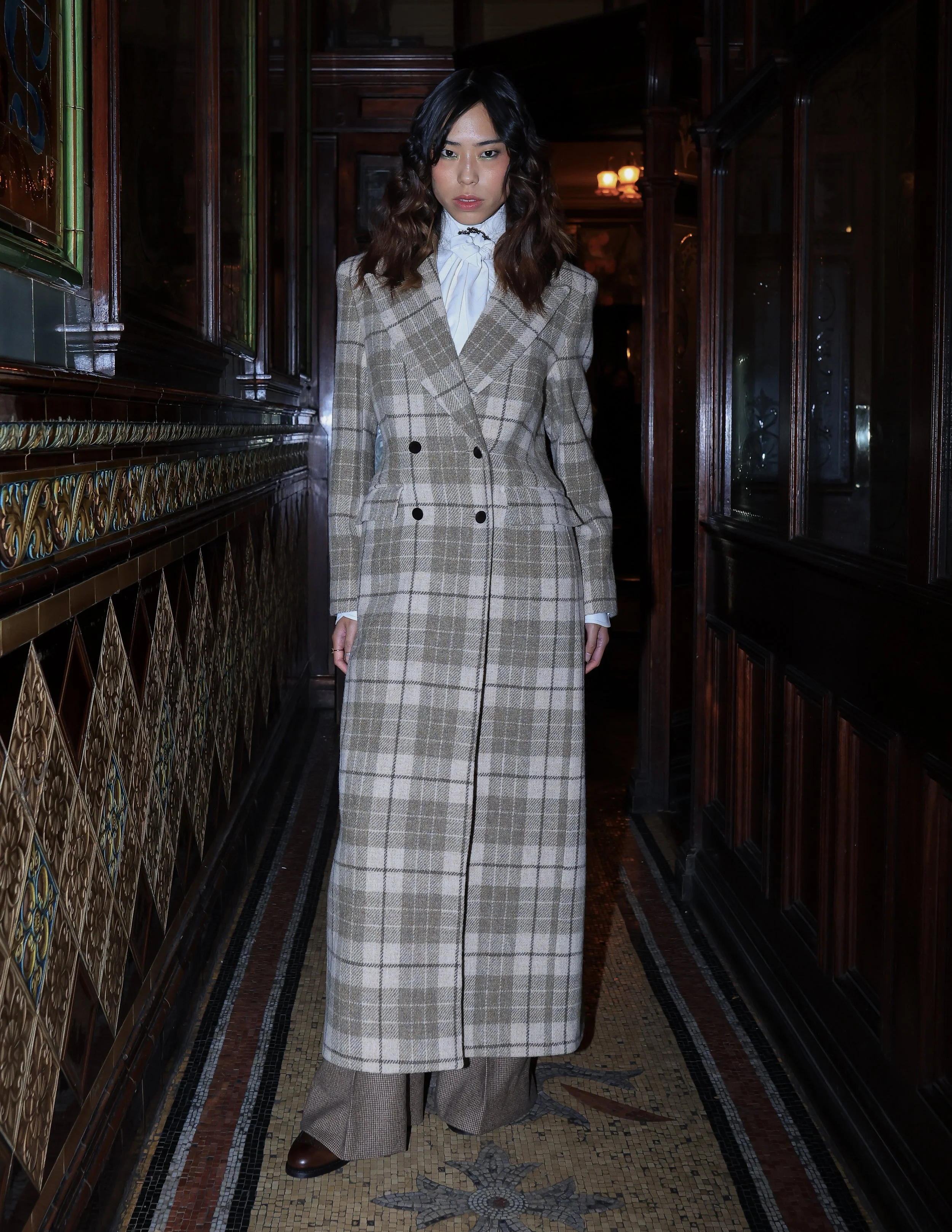
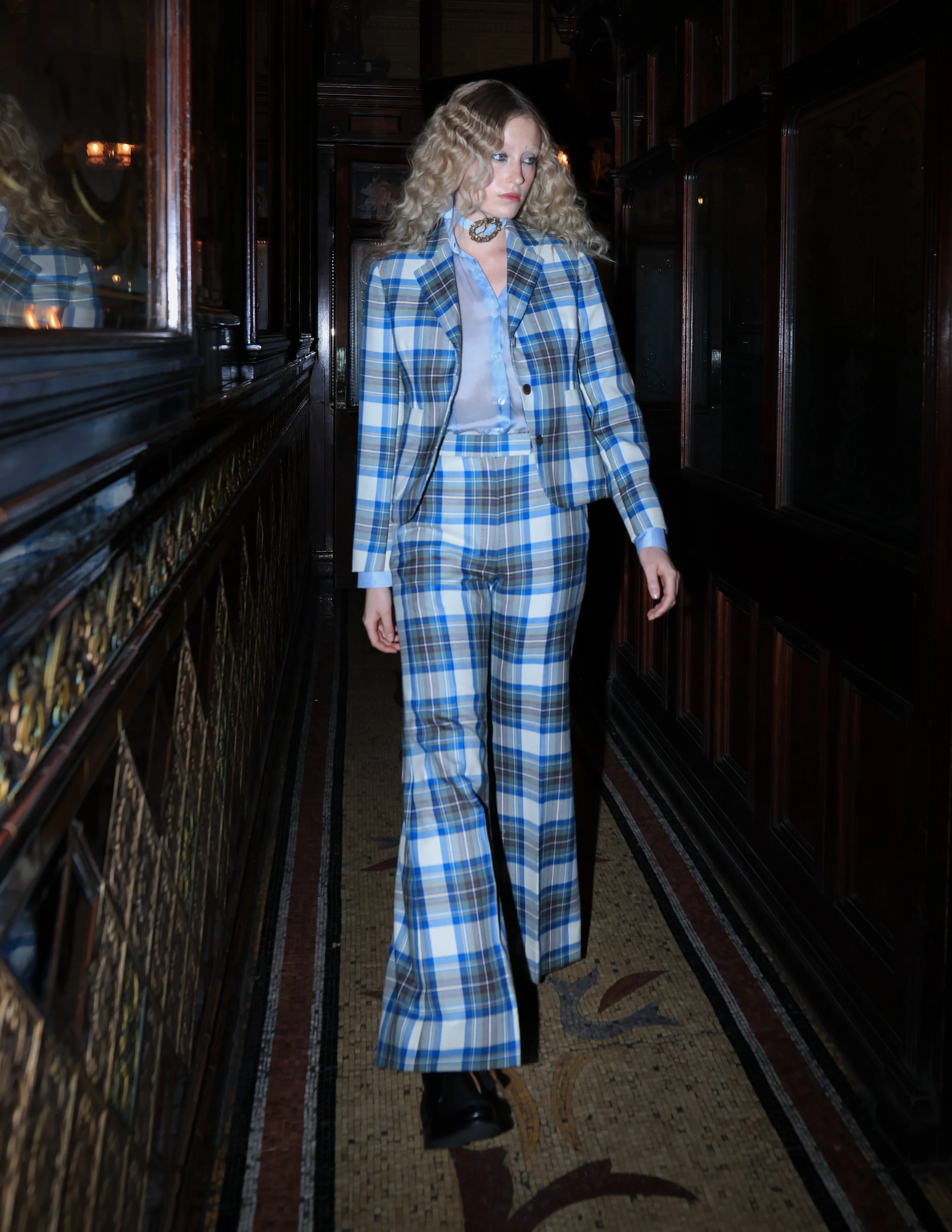
There is something undeniably fitting about an Irish designer staging a fashion collection inside a London pub.
While watching her third show at London Fashion Week SS27 last month, Ruby Slevin cried.
Slevin founded women’s-only tailor Banshee of Savile Row in 2019, the first of its kind on the famed Mayfair tailoring street. The Irish designer tells Drapers that during the show on 20 September, “there was something magic in the air from the collection”.
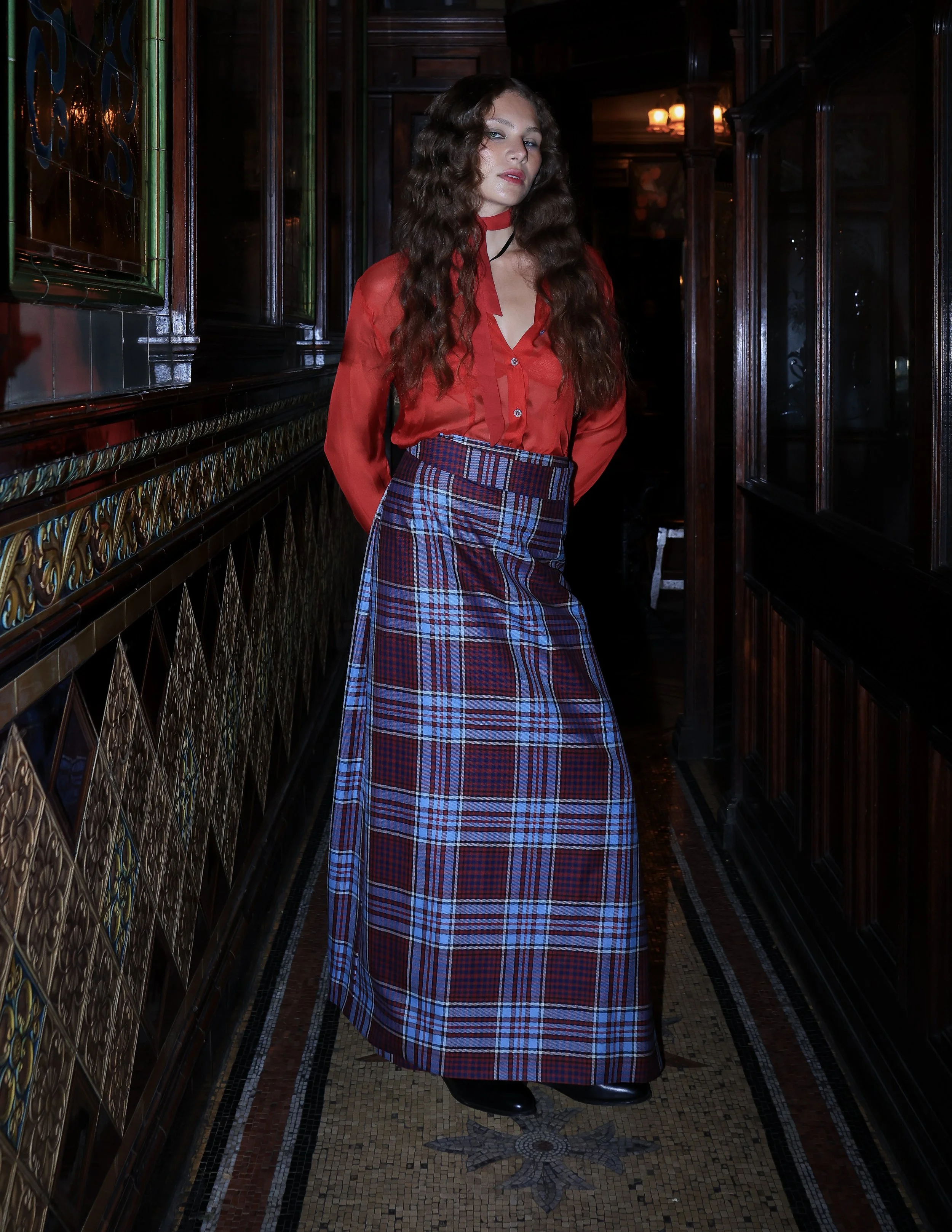
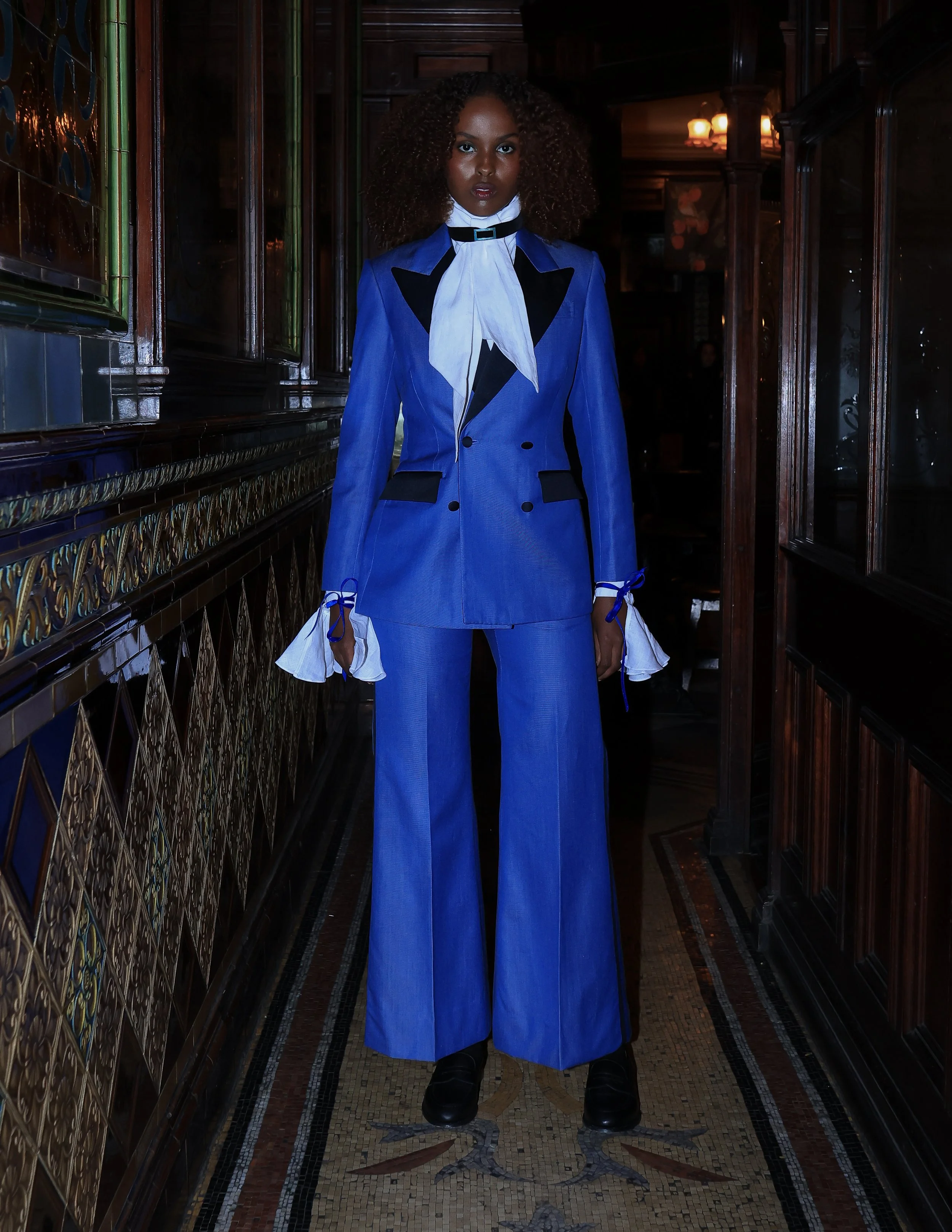
The collection, titled The Banshee Scream, is Slevin’s favourite yet, and the response to the show, as well as trunk show in New York during Fashion Week SS27, has ramped up business so much that Slevin and her team of five full-time tailors are struggling to meet demand on both sides of the pond, with Slevin considering a New York presence in order to do so.
Creating bespoke womenswear from handmade Irish tweeds and linens, among other luxury fabrics – with trouser suits starting at £3,200 – Slevin works closely with her clients and says that keeping up with demand is truly about making sure that each client gets the time and attention that they need, which she would not be willing to compromise in order to service more clients.
Banshee’s offer includes trouser suits, shirts, skirts and full-length overcoats.
Why did you start Banshee?
When I started working on Savile Row back in 2015, there was literally nothing for women. It didn’t exist. There would be a few men’s tailoring places who would reluctantly make for the occasional wife or girlfriend, but they didn’t really like it. Even just trying to get my own personal [pattern] block made to make my own first suit was really difficult. I think a lot of the idea was that women were considered hard to tailor for with our body shapes and personalities. It was just a boys’ club.
It was just a different time in a different world, and so much has changed in this short space of time in the last 11 years and I saw a gap in the market.
My brain has always been quite entrepreneurial anyway. I had imagined that I would work for a designer who I liked, like McQueen or Vivienne Westwood, after working on Savile Row, but when I got here, I realised these are the right clothes because they capture my imagination of everything that I think clothes should be, which is that they’re heirlooms that are made for life, and you’re not just buying these clothes that you can’t wear after a couple of years because they wear out.
The cost-per-wear over years winds up being quite low if you look at it in that way. You don’t have to sacrifice on the cloth. You don’t have to sacrifice on the fit. You can collaborate on the design process with your tailor if you find a tailor who you get on with.
I felt that I had a point of view that I could put across, especially A) for women, and B) I think my aesthetic is something that hasn’t been seen on Savile Row before, so with that combination: not just about women, but also about the design.
How is business at the moment?
The brand is skyrocketing at a serious pace with the amount of clients that we’re getting from New York and London Fashion Week. It’s amazing, but it’s weird: I was looking through things that I had been imagining for this brand before I set it up nearly 10 years ago. I was thinking about setting up a brand, but I was working for other people at the time, and stuff that’s happening now is all stuff that I had had on my dream list.
It’s amazing. I’m pinching myself, going, “okay, I can’t keep up with the work. There’s not enough hours in the day,” but then also, it’s all pinch-me moments that I keep having on a daily basis. I’m going, “wow, to be this busy is actually such a blessing.”
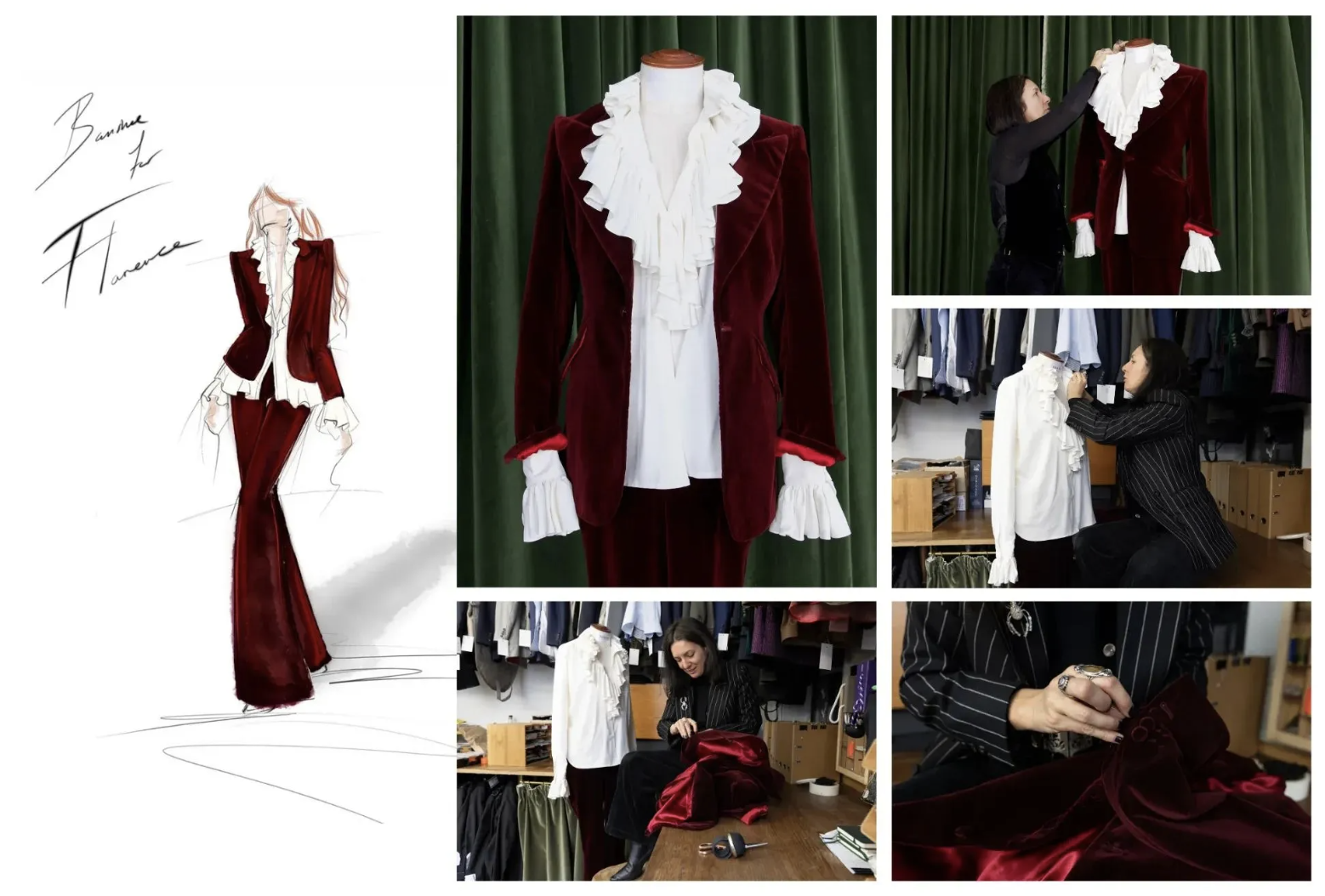
Speaking of dreams, Florence Welch wore one of your suits for her performance at the Mercury Awards last week. How did that come about?
[Florence Welch’s stylist] Aldene Johnson styled my show for London Fashion Week SS27, and we just got on really well together. We worked really well together, and from that, she told me she’d love to get Florence back in a suit. It’s been since Glastonbury 2015 since she’s worn a suit, so we just started coming up with ideas together, and then we showed them to Florence and she loved it.
Meeting her for the last few weeks doing fittings, I did it the Savile Row way with the toile fitting, which is a mock up of the suit with all the baste stitches, and then final fittings and tweaks and then [Johnson] took it on the train to Newcastle [where the Mercury Awards took place].
It’s been a really lovely experience because she’s a dream Banshee. She was definitely somebody I had written down as a dream client if I was going to dress anyone. You know, when people ask you who would you like to dress, because I love her music and I love her vibe.
You left your career in finance to retrain in fashion design. What was that shift like?
I remember having the realisation even when I was living in Melbourne and working in investments, where I kept buying fabrics and joining exchanges for people exchanging vintage clothing and I had little notebooks with ideas and designs. I was doing it anyway and I couldn’t help but do it, so it was always there.
It’s good to do something sensible to start with. For a young person, it did benefit me in the long run going about it that way – it helped me with having a business now.
Who is your main customer?
I’ve had seven years getting to know my clients. I know who they are, and even if they work in law or finance, they might have an undergraduate degree in art history, and they like to go to Frieze [art fair].
There’s a certain type of person. A lot of them are very creative individuals, whether they work in the arts as gallery curators, or if they work in more conventional jobs, they are very interested in art and design and I think it’s great that we all find each other.
You are the first fully womenswear tailor on Savile Row. Did your arrival spark any pushback or reaction from the heritage tailors on the street?
Definitely in the early days I had a few because obviously I’ve had a lot of help along the way setting up the brand from other people at Savile Row. I definitely had a lot of raised eyebrows in some of my designs because there was the right way to do things that were considered very Savile Row, very English and menswear focused, and I’m not trying to do a women’s brand that is the equivalent to a men’s one. This is a Savile Row fashion brand.
What are the main challenges you’re facing at the moment?
Just with the growth at the moment, needing more people is an area that needs work. There’s always going to be challenges because I see myself as a designer, but I also see myself as an entrepreneur, so any business you have, whether you own a coffee shop or a tailoring house, every time you get to a new stage, you find new hurdles that you have to overcome. You think, I’ve just climbed this amazing mountain, then you realise, oh wait, there’s a bigger one. I think that’s just the nature of growth and being a business owner.
In terms of being a tailoring house, I’d say it’s just about getting more people to consider that they can get things made and know that they can get things made because a lot of people have come to me for the first time saying, “I’ve been complaining to a friend saying I couldn’t find clothes that I liked that fit properly,” and then they said, “well, why don’t you go to a tailor?” And they’d never even thought about it.
That’s a hurdle to overcome, to get people more aware that they can get something made, that it’s a possibility.